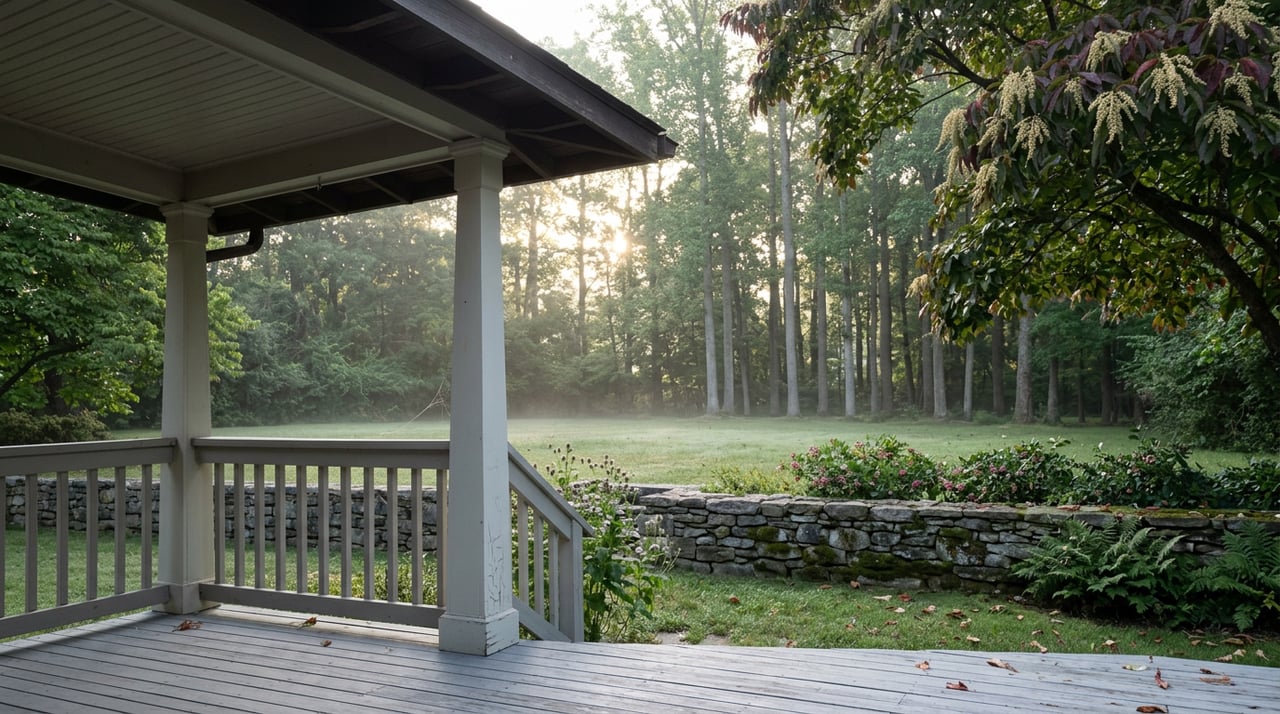
The Huckleberry Trail Is Whole Again. What Reopening Means for Blacksburg Riders
August 13, 2026
August 13, 2026
When Montgomery County announced the Huckleberry Trail's full reopening on April 17, one local TV report described it simply as open to "pedestrians, cyclists, runners, and whatever native furry friends use the path." That is the kind of line that makes a construction update sound like a formality, a box checked after months of orange fencing and detour signs finally coming down.
But if you have lived in Blacksburg through the past year, "reopened" undersells what actually happened. For five and a half months, the trail that connects this town to Christiansburg was not simply closed in one spot. It was cut in half, with no way around the gap. And the way locals adapted to that gap says something worth noticing now that it is gone.
Starting November 3, 2025, Montgomery County shut down the section of the Huckleberry Trail running from a point known on county maps as Bridge 1 out to the Hightop Road area, to rebuild three aging bridges. The county's own closure notice was blunt about the tradeoff: no detour would be available, because of the nature of the bridge work, and Coal Mining Heritage Park, which sits along that stretch, would close along with it.
The project reopened in pieces rather than all at once:
| Date | What changed |
|---|---|
| Nov. 3, 2025 | Bridge 1 to Hightop Road closes, no detour, Coal Mining Heritage Park shuts down too |
| March 12, 2026 | Uptown Christiansburg to Merrimac reopens, restoring restroom access at Merrimac and the park |
| April 17, 2026 | Final two bridges finish, Montgomery County's full portion of the trail reopens |
The finished project replaced all three structures with new concrete abutments, steel bridge frames, upgraded stormwater work, and fresh asphalt approaches, for right around $1 million, paid for in cash out of money the county had set aside over several years for parks improvements. No bonds, no new debt. Just a slow, expensive, necessary fix to a trail most people had never thought about as infrastructure until they couldn't use it.
Here is the part that got lost in the headlines: the Huckleberry Trail was never really one continuous ribbon of pavement. It is three connected pieces, a 15-mile paved spine that anchors a much larger 60-mile network of paved and natural-surface trails. The original roughly 7.5-mile stretch runs from the Blacksburg library trailhead down to the Christiansburg Recreation Center. A separate branch, Huckleberry North, splits off at a roundabout south of Route 460 and climbs about 5 miles to Heritage Community Park, a 169-acre property that was once the Brown family farm. A shorter southern branch winds through Christiansburg neighborhoods toward the high school.
The bridge project only touched the middle of that first, original stretch, the exact section that physically links the two downtowns. Which means Huckleberry North never closed at all. The Blacksburg-Rotary Mountain Bike Skills Park, built inside Heritage Community Park with a green line, a blue line, and a black rock garden line for more advanced riders, kept running the entire time the bridges were out. So did the Gateway Trail connection into the Jefferson National Forest. If your Huckleberry habit was a loop through Heritage Park and back, you may not have noticed the closure at all.
If your habit was riding into Christiansburg, you noticed immediately, because there was nowhere else to go.
Virginia Tech's cycling club keeps a page of training routes for its riders, and its description of the Huckleberry is almost affectionate: a roughly 7-mile bike path Blacksburg riders use to reach the shops in Christiansburg, or, as the club puts it, "to get some tacos" at La Tienda Latina. That specific ride, the one that turns a training loop into an errand, was not possible for the better part of a school year. There was no detour, so the choice was either drive, find a different route on roads, or skip it.
The closure also took away the trail's only real rest stop between the two towns. Coal Mining Heritage Park, a mile marker roughly halfway through the ride, has restrooms, benches, and interpretive signage explaining the old mining equipment left along the loop. For anyone attempting the full one-way ride between Blacksburg's library trailhead and the Christiansburg Recreation Center, a distance the trail's own map lists at about 7.5 miles each direction, that park was the natural halfway break. It was closed along with the bridges, which meant the full ride essentially stopped being a comfortable option, not just an impossible one.
Cadets at Virginia Polytechnic Institute nicknamed the old rail stop "Huckleberry Junction" because the train ran so slowly through the huckleberry bushes growing along the line that passengers could step off, pick a handful, and climb back on before it pulled away. The last passenger train left in 1958. The last freight run came through in 1966. The name outlasted the railroad by decades, and the trail that replaced the tracks kept it.
The bridges have been finished since mid-April, which by local-news standards makes this old information. But there is a difference between a project being complete and a habit catching up to it. If you spent the winter and spring routing around Christiansburg because that is what the closure taught you to do, you have had exactly one summer to unlearn that, and Blacksburg summers are quiet ones for trail traffic. The real test starts this month, as Virginia Tech's students return for fall semester and the northernmost two miles of the trail, the stretch that runs past Lane Stadium close enough that you can sometimes hear the marching band practicing, start filling back up with commuters and runners on their way to campus.
That timing matters, because the full connection between Blacksburg and Christiansburg is genuinely useful, not just scenic. A 7.5-mile ride each way is a realistic bike commute for plenty of people, and now it is a continuous one again, restrooms and all. Meanwhile, Christiansburg has been extending its own end of the trail independently of the bridge project. The town recently finished a phase that pushes the southern branch to the Food Lion shopping center on North Franklin Street, and design work is underway on a further extension to Christiansburg High School. None of that touches the bridges that just reopened, but it is a reminder that the trail is still actively growing on both ends at once, even in the same year it spent five months split down the middle.
The bridges are fixed. The habit of treating this as two separate trails instead of one is the part still catching up.
If you are new to Blacksburg, or thinking about what daily life actually looks like in a town built around a trail like this, the Swanson Team knows these roads, these routes, and these small local shifts better than most. Reach out anytime you want a neighbor's read on the area, not just a listing sheet.


We treat every client like a longtime friend, guiding each step with honesty, care, and a commitment to protecting your investment.

The Swanson Team
Address 3681 Yellow Sulphur Rd Ste 1A Blacksburg, VA 24060